

Tokenizing Imagination: How Programmable IP Paves The Way For Infinite IP
The Birth of Living Stories, Part 7

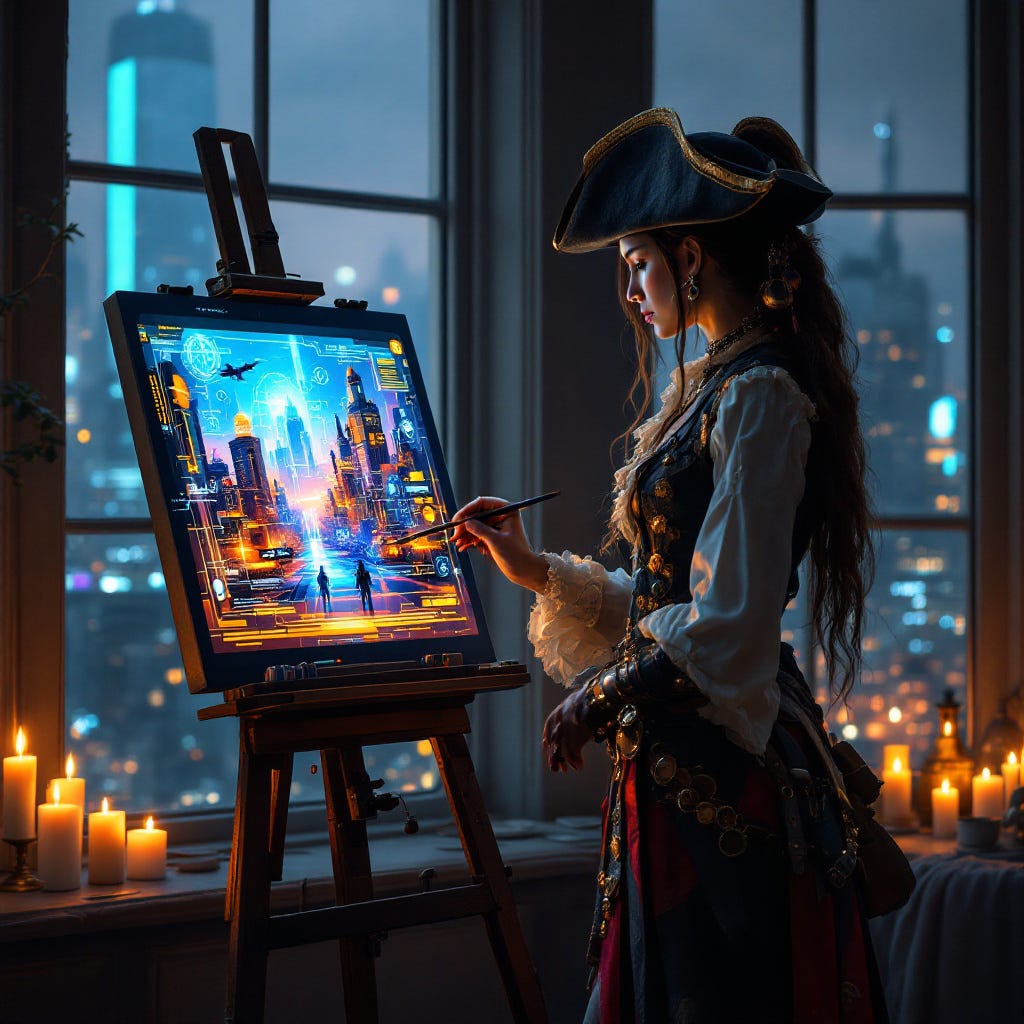
If interoperable 3D assets compose the DNA layer of the digital realm, then intellectual property (IP) rights compose the atomic layer. Without the ‘right’ to build on an existing IP, there is no way for stories to become platforms.
The idea of stories as platforms might seem novel, even a bit whimsical at first. But when you dig beneath the surface, this concept reveals a profound shift in how we think about storytelling. Programmable IP paves the way for "Infinite IP", a framework where stories can evolve, adapt, and expand indefinitely, driven by creators and audiences in a seamless digital dance that does for stories what open source did for software.
Enter STORY, a Layer 1 “IP blockchain” that conceptualizes IP as akin to "IP Legos," allowing creators to build, modify, and remix their work in a way that's never been possible. But it's not merely the technology that fascinates—it's what it enables. Imagine a world where intellectual property—the very backbone of storytelling—becomes as dynamic and programmable as a line of code. That's the promise we're facing.
At the core of this shift is the idea that IP can be converted into digital assets that possess the same flexibility as cryptocurrencies do with money. Where “programmable money” (crypto) made financial transactions open and algorithmic, programmable IP “tokenizes creativity”, making storytelling universally interactive. The common stickiness of intellectual property as a closed-off, jealously guarded artifact dissolves, replaced by a fluid, composable ecosystem of ideas and narratives. These are not your grandparent's copyrights; they're IP legos, ready to construct vast new worlds that stretch across media and platforms.
What does this mean for creators? Quite a lot, actually. Traditionally, intellectual property has been a tough beast to tame. It sits static, locked away in legal sheets that seem designed more to limit than to liberate. But programmable IP flips this narrative. By enabling creators to set on-chain rules—rules written in digital stone that are self-enforcing and transparent—it offers an elegance that the traditional legal frameworks lack. When code becomes law, the need for stacks of paperwork diminishes. These digital frameworks promise to uphold the rights of creators while encouraging a broader constellation of users to share, adapt, and expand on the stories.
Consider this: you've created a memorable side character in a story. Traditionally, any adaptation, any spin-off, would require a slog through the swampy terrains of legal negotiations. But what if your character is a programmable IP? Just as a dollar bill has a straightforward use, your character's ‘uses’ and permissions are ingrained, contract-like, into its on-chain metadata. Anyone who wants to use this character in their derivative work can simply agree to the terms and pay the corresponding fees. Voila, creativity on demand.
This unlocking of value via on-chain licensing creates a mechanism for aligning incentives among stakeholders. Known in economics as 'mechanism design' or 'reverse game theory', this approach uses incentives strategically to promote successful outcomes. With programmable IP, we can craft narratives where incentives for all stakeholders—creators, developers, fans—naturally align. Each participant in the story's ecosystem knows their role and their potential reward, creating a self-sustaining loop of creativity and commerce. In this sense, the platform transcends its static origins, becoming a thriving ecosystem where stories are driven by the momentum of communal interest.
The world of tokens further amplifies these capabilities. Just as cryptocurrency enabled new forms of economic activity separate from traditional banks, tokens serve as an automated means to foster and reward community growth. They parallel the programmable money in decentralized finance (DeFi) but apply to the creative sector. These tokens can serve many purposes, from representing ownership rights to facilitating peer-to-peer commerce, forming the nucleus of a vibrant creative “token economy”.
The economic fabric of storytelling thus becomes multi-dimensional, creating a programmable architecture that allows creators, developers, and fans to coordinate, set up their own networks, and automate the rules that govern transactions.
Additionally, blockchain networks like STORY provide an essential foundation for establishing provenance in the digital realm, ensuring the authenticity and traceability of IP-based assets. In a world increasingly influenced by AI-driven content creation, these networks serve as a counterbalance by offering creators a secure and transparent way to verify ownership and usage of their work. By recording the origin and history of each digital asset on an immutable ledger, STORY enables creators and communities to trust the source and evolution of the IP they engage with, fostering a more accountable creative economy.
Moreover, the programmability of blockchains empowers creators to define how their IP interacts with AI systems. By embedding customizable economic terms directly into the metadata of digital assets, creators can determine when, how, and under what conditions AI tools can utilize their work. This mechanism not only protects creators’ rights but also establishes pathways for mutually beneficial relationships between creators and the broader ecosystem. As AI continues to grow as a creative tool, programmable IP ensures that creators retain agency while inviting communities to expand stories collaboratively, creating a virtuous cycle of innovation and growth.
This transition might sound magical, almost utopian, but make no mistake: it's complex and fraught with challenges. We must negotiate the pitfalls of decentralization, handle scalability issues, and confront existing legal systems that might resist this change. Yet, as with any revolutionary shift, these hurdles are not barriers but stepping stones.
The digital landscape offers a vast canvas, and with tools like STORY, we're only starting to draw the outlines of an intricate tapestry of interconnected stories. Programmable IP is the brush, the palette, and perhaps even the muse. It invites both novice storytellers and seasoned creatives into a shared narrative space, one where the old limits of creation are dissolved in the digital ether.
In thinking of IP this way, we're not just telling stories. We're building the mansion they could live in—and inviting the world to come in, periodically rearrange the furniture, throw new parties in freshly painted rooms, and even build some expansions. The house of stories is growing, and programmable IP is the key that lets us enter a home full of unlimited possibilities.